
The 2nd Lecture of Spring Semester 2026: Scientific Thinking and Research Design
Apr 18, 2026
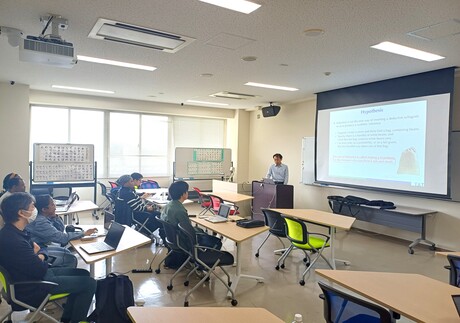
In the afternoon, an interdisciplinary seminar tutorial session was conducted for D1 students to build their research foundations. The session focused on problem setting and literature review, guiding students on how to effectively employ these essential elements to demonstrate the value of their research. Prof. Ito (TUAT) and Prof. Yasumura (TUAT) explained the key criteria for a strong research topic—significance, viability, and interest—as well as the technique of “strategic mapping” to clarify a study’s relevance and contribution.
Prof. Hashiyama (UEC), Prof. Nakayama (TUFS) and Prof. Sato (TUFS) also participated as tutors to support the students through discussions.
They strongly emphasized that a literature review should not be treated merely as a summary of previous studies, but rather as a logical framework for establishing the positioning, originality, and necessity of one’s own research.
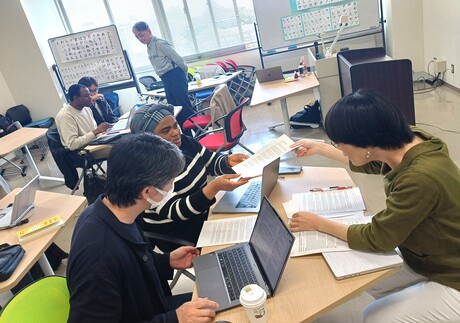
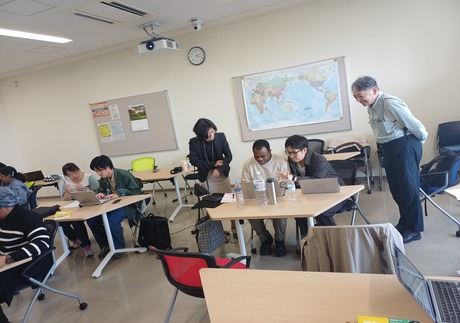
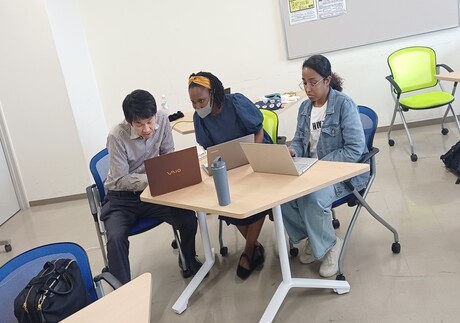
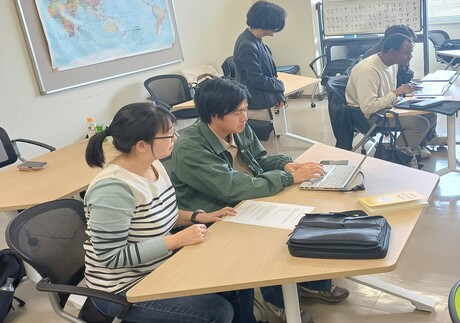
One of the greatest strengths of JDPSR is the close relationship between students and faculty members, which allows students to discuss their research comfortably and receive supportive advice.